The 20 verses of Al-Balad
- Surah
- 90
- Verses
- 20
- Revealed in
- Makkah
- Meaning
- The City
-
1
لَآ أُقْسِمُ بِهَـٰذَا ٱلْبَلَدِ
lā uq'simu bihādhā l-baladi
I swear by this city [i.e., Makkah] –
Word by word
- لَآlāNay
- أُقْسِمُuq'simuI swear
- بِهَـٰذَاbihādhāby this
- ٱلْبَلَدِl-baladicity
-
2
وَأَنتَ حِلٌّۢ بِهَـٰذَا ٱلْبَلَدِ
wa-anta ḥillun bihādhā l-baladi
And you, [O Muḥammad], are free of restriction in this city –
Word by word
- وَأَنتَwa-antaAnd you
- حِلٌّۢḥillun(are) free (to dwell)
- بِهَـٰذَاbihādhāin this
- ٱلْبَلَدِl-baladicity
-
3
وَوَالِدٍ وَمَا وَلَدَ
wawālidin wamā walada
And [by] the father and that which was born [of him],
Word by word
- وَوَالِدٍۢwawālidinAnd the begetter
- وَمَاwamāand what
- وَلَدَwaladahe begot
-
4
لَقَدْ خَلَقْنَا ٱلْإِنسَـٰنَ فِى كَبَدٍ
laqad khalaqnā l-insāna fī kabadin
We have certainly created man into hardship.
Word by word
- لَقَدْlaqadCertainly
- خَلَقْنَاkhalaqnāWe have created
- ٱلْإِنسَـٰنَl-insānaman
- فِىfī(to be) in
- كَبَدٍkabadinhardship
-
5
أَيَحْسَبُ أَن لَّن يَقْدِرَ عَلَيْهِ أَحَدٌ
ayaḥsabu an lan yaqdira ʿalayhi aḥadun
Does he think that never will anyone overcome him?
Word by word
- أَيَحْسَبُayaḥsabuDoes he think
- أَنanthat
- لَّنlannot
- يَقْدِرَyaqdirahas power
- عَلَيْهِʿalayhiover him
- أَحَدٌۭaḥadunanyone
-
6
يَقُولُ أَهْلَكْتُ مَالًا لُّبَدًا
yaqūlu ahlaktu mālan lubadan
He says, "I have spent wealth in abundance."
Word by word
- يَقُولُyaqūluHe will say
- أَهْلَكْتُahlaktuI have squandered
- مَالًۭاmālanwealth
- لُّبَدًاlubadanabundant
-
7
أَيَحْسَبُ أَن لَّمْ يَرَهُۥٓ أَحَدٌ
ayaḥsabu an lam yarahu aḥadun
Does he think that no one has seen him?
Word by word
- أَيَحْسَبُayaḥsabuDoes he think
- أَنanthat
- لَّمْlamnot
- يَرَهُۥٓyarahusees him
- أَحَدٌaḥadunanyone
-
8
أَلَمْ نَجْعَل لَّهُۥ عَيْنَيْنِ
alam najʿal lahu ʿaynayni
Have We not made for him two eyes?
Word by word
- أَلَمْalamHave not
- نَجْعَلnajʿalWe made
- لَّهُۥlahufor him
- عَيْنَيْنِʿaynaynitwo eyes
-
9
وَلِسَانًا وَشَفَتَيْنِ
walisānan washafatayni
And a tongue and two lips?
Word by word
- وَلِسَانًۭاwalisānanAnd a tongue
- وَشَفَتَيْنِwashafatayniand two lips
-
10
وَهَدَيْنَـٰهُ ٱلنَّجْدَيْنِ
wahadaynāhu l-najdayni
And have shown him the two ways?
Word by word
- وَهَدَيْنَـٰهُwahadaynāhuAnd shown him
- ٱلنَّجْدَيْنِl-najdaynithe two ways
-
11
فَلَا ٱقْتَحَمَ ٱلْعَقَبَةَ
falā iq'taḥama l-ʿaqabata
But he has not broken through the difficult pass.
Word by word
- فَلَاfalāBut not
- ٱقْتَحَمَiq'taḥamahe has attempted
- ٱلْعَقَبَةَl-ʿaqabatathe steep path
-
12
وَمَآ أَدْرَىٰكَ مَا ٱلْعَقَبَةُ
wamā adrāka mā l-ʿaqabatu
And what can make you know what is [breaking through] the difficult pass?
Word by word
- وَمَآwamāAnd what
- أَدْرَىٰكَadrākacan make you know
- مَاmāwhat
- ٱلْعَقَبَةُl-ʿaqabatuthe steep path (is)
-
13
فَكُّ رَقَبَةٍ
fakku raqabatin
It is the freeing of a slave
Word by word
- فَكُّfakku(It is) freeing
- رَقَبَةٍraqabatina neck
-
14
أَوْ إِطْعَـٰمٌ فِى يَوْمٍ ذِى مَسْغَبَةٍ
aw iṭ'ʿāmun fī yawmin dhī masghabatin
Or feeding on a day of severe hunger
Word by word
- أَوْawOr
- إِطْعَـٰمٌۭiṭ'ʿāmunfeeding
- فِىfīin
- يَوْمٍۢyawmina day
- ذِىdhīof
- مَسْغَبَةٍۢmasghabatinsevere hunger
-
15
يَتِيمًا ذَا مَقْرَبَةٍ
yatīman dhā maqrabatin
An orphan of near relationship
Word by word
- يَتِيمًۭاyatīmanAn orphan
- ذَاdhāof
- مَقْرَبَةٍmaqrabatinnear relationship
-
16
أَوْ مِسْكِينًا ذَا مَتْرَبَةٍ
aw mis'kīnan dhā matrabatin
Or a needy person in misery
Word by word
- أَوْawOr
- مِسْكِينًۭاmis'kīnana needy person
- ذَاdhāin
- مَتْرَبَةٍۢmatrabatinmisery
-
17
ثُمَّ كَانَ مِنَ ٱلَّذِينَ ءَامَنُوا۟ وَتَوَاصَوْا۟ بِٱلصَّبْرِ وَتَوَاصَوْا۟ بِٱلْمَرْحَمَةِ
thumma kāna mina alladhīna āmanū watawāṣaw bil-ṣabri watawāṣaw bil-marḥamati
And then being among those who believed and advised one another to patience and advised one another to compassion.
Word by word
- ثُمَّthummaThen
- كَانَkānahe is
- مِنَminaof
- ٱلَّذِينَalladhīnathose who
- ءَامَنُوا۟āmanūbelieve
- وَتَوَاصَوْا۟watawāṣawand enjoin (each other)
- بِٱلصَّبْرِbil-ṣabrito patience
- وَتَوَاصَوْا۟watawāṣawand enjoin (each other)
- بِٱلْمَرْحَمَةِbil-marḥamatito compassion
-
18
أُو۟لَـٰٓئِكَ أَصْحَـٰبُ ٱلْمَيْمَنَةِ
ulāika aṣḥābu l-maymanati
Those are the companions of the right.
Word by word
- أُو۟لَـٰٓئِكَulāikaThose
- أَصْحَـٰبُaṣḥābu(are the) companions
- ٱلْمَيْمَنَةِl-maymanati(of) the right (hand)
-
19
وَٱلَّذِينَ كَفَرُوا۟ بِـَٔايَـٰتِنَا هُمْ أَصْحَـٰبُ ٱلْمَشْـَٔمَةِ
wa-alladhīna kafarū biāyātinā hum aṣḥābu l-mashamati
But they who disbelieved in Our signs - those are the companions of the left.
Word by word
- وَٱلَّذِينَwa-alladhīnaBut those who
- كَفَرُوا۟kafarūdisbelieve
- بِـَٔايَـٰتِنَاbiāyātināin Our Verses
- هُمْhumthey
- أَصْحَـٰبُaṣḥābu(are the) companions
- ٱلْمَشْـَٔمَةِl-mashamati(of) the left (hand)
-
20
عَلَيْهِمْ نَارٌ مُّؤْصَدَةٌۢ
ʿalayhim nārun mu'ṣadatun
Over them will be fire closed in.
Word by word
- عَلَيْهِمْʿalayhimOver them
- نَارٌۭnārun(will be the) Fire
- مُّؤْصَدَةٌۢmu'ṣadatunclosed in
Arabic text, transliteration and translation as they appear in the Quran for Kids app. English translation: Saheeh International.
What Al-Balad teaches

Gifts we use every day
Allah gave us two eyes, a tongue and two lips (verses 8 and 9).

Two ways
Allah showed us the two ways, good and bad (verse 10).

The steep path
The harder, better path is feeding the hungry orphan and the poor (verses 11 to 16).

Patience and mercy
Believers encourage each other to patience and to mercy (verse 17).
Learning Al-Balad with your child
Point and name
At verses 8–9, point to your eyes, tongue and lips together and say thank you to Allah.
Two parts
Learn verses 1–10, then 11–20.
Climb the steep path
Plan one act of feeding or helping someone in need this week.
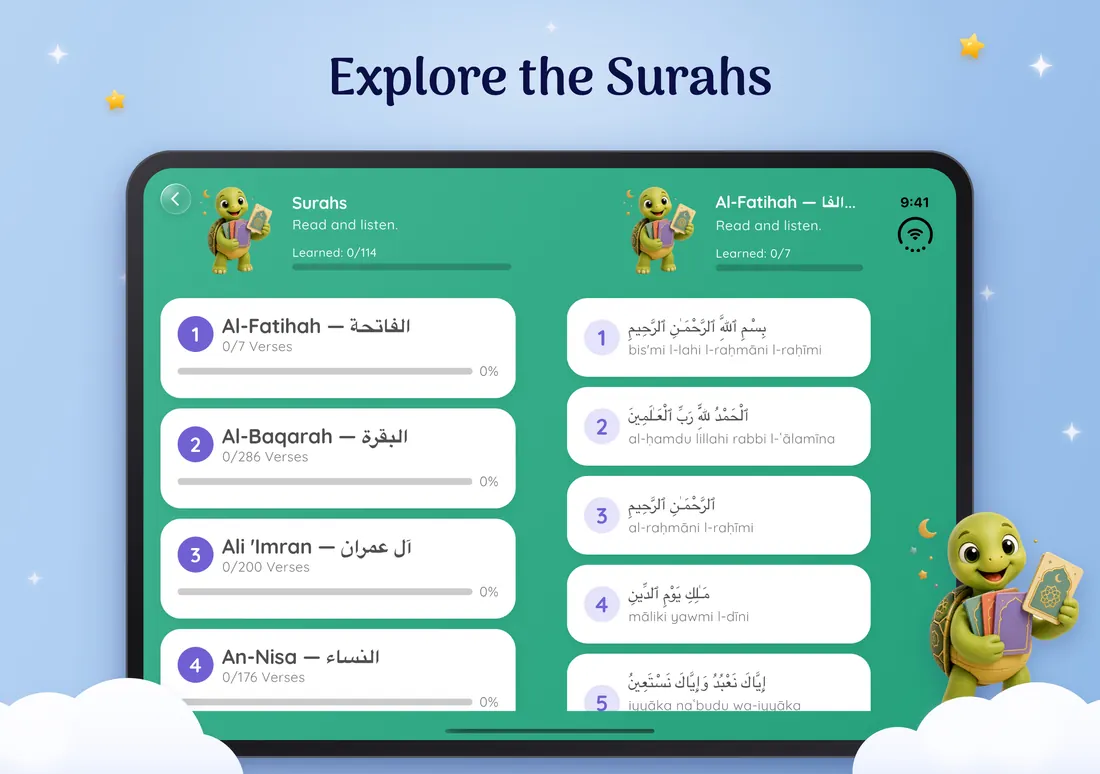
Learn Al-Balad word by word in the app
In Quran for Kids, every verse of Al-Balad is split into words your child can tap, hear and understand.
- Tap a word to hear it and see its meaning
- Play the whole verse once every word has been heard
- Learned words and verses stay marked
Begin your child's journey with the Quran today
Learn, play and grow with Quran for Kids.