The 42 verses of Abasa
- Surah
- 80
- Verses
- 42
- Revealed in
- Makkah
- Meaning
- He Frowned
-
1
عَبَسَ وَتَوَلَّىٰٓ
ʿabasa watawallā
He [i.e., the Prophet (ﷺ) ] frowned and turned away
Word by word
- عَبَسَʿabasaHe frowned
- وَتَوَلَّىٰٓwatawallāand turned away
-
2
أَن جَآءَهُ ٱلْأَعْمَىٰ
an jāahu l-aʿmā
Because there came to him the blind man, [interrupting].
Word by word
- أَنanBecause
- جَآءَهُjāahucame to him
- ٱلْأَعْمَىٰl-aʿmāthe blind man
-
3
وَمَا يُدْرِيكَ لَعَلَّهُۥ يَزَّكَّىٰٓ
wamā yud'rīka laʿallahu yazzakkā
But what would make you perceive, [O Muḥammad], that perhaps he might be purified
Word by word
- وَمَاwamāBut what
- يُدْرِيكَyud'rīkawould make you know
- لَعَلَّهُۥlaʿallahuthat he might
- يَزَّكَّىٰٓyazzakkāpurify himself
-
4
أَوْ يَذَّكَّرُ فَتَنفَعَهُ ٱلذِّكْرَىٰٓ
aw yadhakkaru fatanfaʿahu l-dhik'rā
Or be reminded and the remembrance would benefit him?
Word by word
- أَوْawOr
- يَذَّكَّرُyadhakkarube reminded
- فَتَنفَعَهُfatanfaʿahuso would benefit him
- ٱلذِّكْرَىٰٓl-dhik'rāthe reminder
-
5
أَمَّا مَنِ ٱسْتَغْنَىٰ
ammā mani is'taghnā
As for he who thinks himself without need,
Word by word
- أَمَّاammāAs for
- مَنِmani(him) who
- ٱسْتَغْنَىٰis'taghnāconsiders himself free from need
-
6
فَأَنتَ لَهُۥ تَصَدَّىٰ
fa-anta lahu taṣaddā
To him you give attention.
Word by word
- فَأَنتَfa-antaSo you
- لَهُۥlahuto him
- تَصَدَّىٰtaṣaddāgive attention
-
7
وَمَا عَلَيْكَ أَلَّا يَزَّكَّىٰ
wamā ʿalayka allā yazzakkā
And not upon you [is any blame] if he will not be purified.
Word by word
- وَمَاwamāAnd not
- عَلَيْكَʿalaykaupon you
- أَلَّاallāthat not
- يَزَّكَّىٰyazzakkāhe purifies himself
-
8
وَأَمَّا مَن جَآءَكَ يَسْعَىٰ
wa-ammā man jāaka yasʿā
But as for he who came to you striving [for knowledge]
Word by word
- وَأَمَّاwa-ammāBut as for
- مَنman(he) who
- جَآءَكَjāakacame to you
- يَسْعَىٰyasʿāstriving
-
9
وَهُوَ يَخْشَىٰ
wahuwa yakhshā
While he fears [Allāh],
Word by word
- وَهُوَwahuwaWhile he
- يَخْشَىٰyakhshāfears
-
10
فَأَنتَ عَنْهُ تَلَهَّىٰ
fa-anta ʿanhu talahhā
From him you are distracted.
Word by word
- فَأَنتَfa-antaBut you
- عَنْهُʿanhufrom him
- تَلَهَّىٰtalahhā(are) distracted
-
11
كَلَّآ إِنَّهَا تَذْكِرَةٌ
kallā innahā tadhkiratun
No! Indeed, they [i.e., these verses] are a reminder;
Word by word
- كَلَّآkallāNay
- إِنَّهَاinnahāIndeed, it
- تَذْكِرَةٌۭtadhkiratun(is) a reminder
-
12
فَمَن شَآءَ ذَكَرَهُۥ
faman shāa dhakarahu
So whoever wills may remember it.
Word by word
- فَمَنfamanSo whosoever
- شَآءَshāawills
- ذَكَرَهُۥdhakarahumay remember it
-
13
فِى صُحُفٍ مُّكَرَّمَةٍ
fī ṣuḥufin mukarramatin
[It is recorded] in honored sheets,
Word by word
- فِىfīIn
- صُحُفٍۢṣuḥufinsheets
- مُّكَرَّمَةٍۢmukarramatinhonored
-
14
مَّرْفُوعَةٍ مُّطَهَّرَةٍۭ
marfūʿatin muṭahharatin
Exalted and purified,
Word by word
- مَّرْفُوعَةٍۢmarfūʿatinExalted
- مُّطَهَّرَةٍۭmuṭahharatinpurified
-
15
بِأَيْدِى سَفَرَةٍ
bi-aydī safaratin
[Carried] by the hands of messenger-angels,
Word by word
- بِأَيْدِىbi-aydīIn (the) hands
- سَفَرَةٍۢsafaratin(of) scribes
-
16
كِرَامٍۭ بَرَرَةٍ
kirāmin bararatin
Noble and dutiful.
Word by word
- كِرَامٍۭkirāminNoble
- بَرَرَةٍۢbararatindutiful
-
17
قُتِلَ ٱلْإِنسَـٰنُ مَآ أَكْفَرَهُۥ
qutila l-insānu mā akfarahu
Destroyed [i.e., cursed] is man; how disbelieving is he.
Word by word
- قُتِلَqutilaIs destroyed
- ٱلْإِنسَـٰنُl-insānu[the] man
- مَآmāhow
- أَكْفَرَهُۥakfarahuungrateful is he
-
18
مِنْ أَىِّ شَىْءٍ خَلَقَهُۥ
min ayyi shayin khalaqahu
From what thing [i.e., substance] did He create him?
Word by word
- مِنْminFrom
- أَىِّayyiwhat
- شَىْءٍshayinthing
- خَلَقَهُۥkhalaqahuHe created him
-
19
مِن نُّطْفَةٍ خَلَقَهُۥ فَقَدَّرَهُۥ
min nuṭ'fatin khalaqahu faqaddarahu
From a sperm-drop He created him and destined for him;
Word by word
- مِنminFrom
- نُّطْفَةٍnuṭ'fatina semen-drop
- خَلَقَهُۥkhalaqahuHe created him
- فَقَدَّرَهُۥfaqaddarahuthen He proportioned him
-
20
ثُمَّ ٱلسَّبِيلَ يَسَّرَهُۥ
thumma l-sabīla yassarahu
Then He eased the way for him;
Word by word
- ثُمَّthummaThen
- ٱلسَّبِيلَl-sabīlathe way
- يَسَّرَهُۥyassarahuHe made easy for him
-
21
ثُمَّ أَمَاتَهُۥ فَأَقْبَرَهُۥ
thumma amātahu fa-aqbarahu
Then He causes his death and provides a grave for him.
Word by word
- ثُمَّthummaThen
- أَمَاتَهُۥamātahuHe causes him to die
- فَأَقْبَرَهُۥfa-aqbarahuand provides a grave for him
-
22
ثُمَّ إِذَا شَآءَ أَنشَرَهُۥ
thumma idhā shāa ansharahu
Then when He wills, He will resurrect him.
Word by word
- ثُمَّthummaThen
- إِذَاidhāwhen
- شَآءَshāaHe wills
- أَنشَرَهُۥansharahuHe will resurrect him
-
23
كَلَّا لَمَّا يَقْضِ مَآ أَمَرَهُۥ
kallā lammā yaqḍi mā amarahu
No! He [i.e., man] has not yet accomplished what He commanded him.
Word by word
- كَلَّاkallāNay
- لَمَّاlammāNot
- يَقْضِyaqḍihe has accomplished
- مَآmāwhat
- أَمَرَهُۥamarahuHe commanded him
-
24
فَلْيَنظُرِ ٱلْإِنسَـٰنُ إِلَىٰ طَعَامِهِۦٓ
falyanẓuri l-insānu ilā ṭaʿāmihi
Then let mankind look at his food -
Word by word
- فَلْيَنظُرِfalyanẓuriThen let look
- ٱلْإِنسَـٰنُl-insānuthe man
- إِلَىٰilāat
- طَعَامِهِۦٓṭaʿāmihihis food
-
25
أَنَّا صَبَبْنَا ٱلْمَآءَ صَبًّا
annā ṣababnā l-māa ṣabban
How We poured down water in torrents,
Word by word
- اَنَّاannāThat [We]
- صَبَبْنَاṣababnā[We] poured
- ٱلْمَآءَl-māathe water
- صَبًّۭاṣabban(in) abundance
-
26
ثُمَّ شَقَقْنَا ٱلْأَرْضَ شَقًّا
thumma shaqaqnā l-arḍa shaqqan
Then We broke open the earth, splitting [it with sprouts],
Word by word
- ثُمَّthummaThen
- شَقَقْنَاshaqaqnāWe cleaved
- ٱلْأَرْضَl-arḍathe earth
- شَقًّۭاshaqqansplitting
-
27
فَأَنۢبَتْنَا فِيهَا حَبًّا
fa-anbatnā fīhā ḥabban
And caused to grow within it grain
Word by word
- فَأَنۢبَتْنَاfa-anbatnāThen We caused to grow
- فِيهَاfīhātherein
- حَبًّۭاḥabbangrain
-
28
وَعِنَبًا وَقَضْبًا
waʿinaban waqaḍban
And grapes and herbage
Word by word
- وَعِنَبًۭاwaʿinabanAnd grapes
- وَقَضْبًۭاwaqaḍbanand green fodder
-
29
وَزَيْتُونًا وَنَخْلًا
wazaytūnan wanakhlan
And olive and palm trees
Word by word
- وَزَيْتُونًۭاwazaytūnanAnd olive
- وَنَخْلًۭاwanakhlanand date-palms
-
30
وَحَدَآئِقَ غُلْبًا
waḥadāiqa ghul'ban
And gardens of dense shrubbery
Word by word
- وَحَدَآئِقَwaḥadāiqaAnd gardens
- غُلْبًۭاghul'ban(of) thick foliage
-
31
وَفَـٰكِهَةً وَأَبًّا
wafākihatan wa-abban
And fruit and grass -
Word by word
- وَفَـٰكِهَةًۭwafākihatanAnd fruits
- وَأَبًّۭاwa-abbanand grass
-
32
مَّتَـٰعًا لَّكُمْ وَلِأَنْعَـٰمِكُمْ
matāʿan lakum wali-anʿāmikum
[As] enjoyment [i.e., provision] for you and your grazing livestock.
Word by word
- مَّتَـٰعًۭاmatāʿan(As) a provision
- لَّكُمْlakumfor you
- وَلِأَنْعَـٰمِكُمْwali-anʿāmikumand for your cattle
-
33
فَإِذَا جَآءَتِ ٱلصَّآخَّةُ
fa-idhā jāati l-ṣākhatu
But when there comes the Deafening Blast
Word by word
- فَإِذَاfa-idhāBut when
- جَآءَتِjāaticomes
- ٱلصَّآخَّةُl-ṣākhatuthe Deafening Blast
-
34
يَوْمَ يَفِرُّ ٱلْمَرْءُ مِنْ أَخِيهِ
yawma yafirru l-maru min akhīhi
On the Day a man will flee from his brother
Word by word
- يَوْمَyawma(The) Day
- يَفِرُّyafirruwill flee
- ٱلْمَرْءُl-marua man
- مِنْminfrom
- أَخِيهِakhīhihis brother
-
35
وَأُمِّهِۦ وَأَبِيهِ
wa-ummihi wa-abīhi
And his mother and his father
Word by word
- وَأُمِّهِۦwa-ummihiAnd his mother
- وَأَبِيهِwa-abīhiand his father
-
36
وَصَـٰحِبَتِهِۦ وَبَنِيهِ
waṣāḥibatihi wabanīhi
And his wife and his children,
Word by word
- وَصَـٰحِبَتِهِۦwaṣāḥibatihiAnd his wife
- وَبَنِيهِwabanīhiand his children
-
37
لِكُلِّ ٱمْرِئٍ مِّنْهُمْ يَوْمَئِذٍ شَأْنٌ يُغْنِيهِ
likulli im'ri-in min'hum yawma-idhin shanun yugh'nīhi
For every man, that Day, will be a matter adequate for him.
Word by word
- لِكُلِّlikulliFor every
- ٱمْرِئٍۢim'ri-inman
- مِّنْهُمْmin'humamong them
- يَوْمَئِذٍۢyawma-idhinthat Day
- شَأْنٌۭshanun(will be) a matter
- يُغْنِيهِyugh'nīhioccupying him
-
38
وُجُوهٌ يَوْمَئِذٍ مُّسْفِرَةٌ
wujūhun yawma-idhin mus'firatun
[Some] faces, that Day, will be bright -
Word by word
- وُجُوهٌۭwujūhunFaces
- يَوْمَئِذٍۢyawma-idhinthat Day
- مُّسْفِرَةٌۭmus'firatun(will be) bright
-
39
ضَاحِكَةٌ مُّسْتَبْشِرَةٌ
ḍāḥikatun mus'tabshiratun
Laughing, rejoicing at good news.
Word by word
- ضَاحِكَةٌۭḍāḥikatunLaughing
- مُّسْتَبْشِرَةٌۭmus'tabshiratunrejoicing at good news
-
40
وَوُجُوهٌ يَوْمَئِذٍ عَلَيْهَا غَبَرَةٌ
wawujūhun yawma-idhin ʿalayhā ghabaratun
And [other] faces, that Day, will have upon them dust.
Word by word
- وَوُجُوهٌۭwawujūhunAnd faces
- يَوْمَئِذٍyawma-idhinthat Day
- عَلَيْهَاʿalayhāupon them
- غَبَرَةٌۭghabaratun(will be) dust
-
41
تَرْهَقُهَا قَتَرَةٌ
tarhaquhā qataratun
Blackness will cover them.
Word by word
- تَرْهَقُهَاtarhaquhāWill cover them
- قَتَرَةٌqataratundarkness
-
42
أُو۟لَـٰٓئِكَ هُمُ ٱلْكَفَرَةُ ٱلْفَجَرَةُ
ulāika humu l-kafaratu l-fajaratu
Those are the disbelievers, the wicked ones.
Word by word
- أُو۟لَـٰٓئِكَulāikaThose
- هُمُhumu[they]
- ٱلْكَفَرَةُl-kafaratu(are) the disbelievers
- ٱلْفَجَرَةُl-fajaratuthe wicked ones
Arabic text, transliteration and translation as they appear in the Quran for Kids app. English translation: Saheeh International.
What Abasa teaches

Everyone matters
The one who comes seeking to learn, with fear of Allah, deserves our full attention (verses 1 to 10).

The Quran is a reminder
These verses are a reminder written on honoured pages (verses 11 to 16).

Look at your food
Allah sends rain, splits the earth and grows grain, grapes, olives, dates and fruit for us (verses 24 to 32).
Learning Abasa with your child
A lunchtime lesson
Read verses 24–32 before a meal and name the foods Allah mentions that are on your table.
Talk about listening
Ask your child: how can we make sure everyone feels listened to?
Three parts
Learn verses 1–16, 17–32 and 33–42, one part at a time.
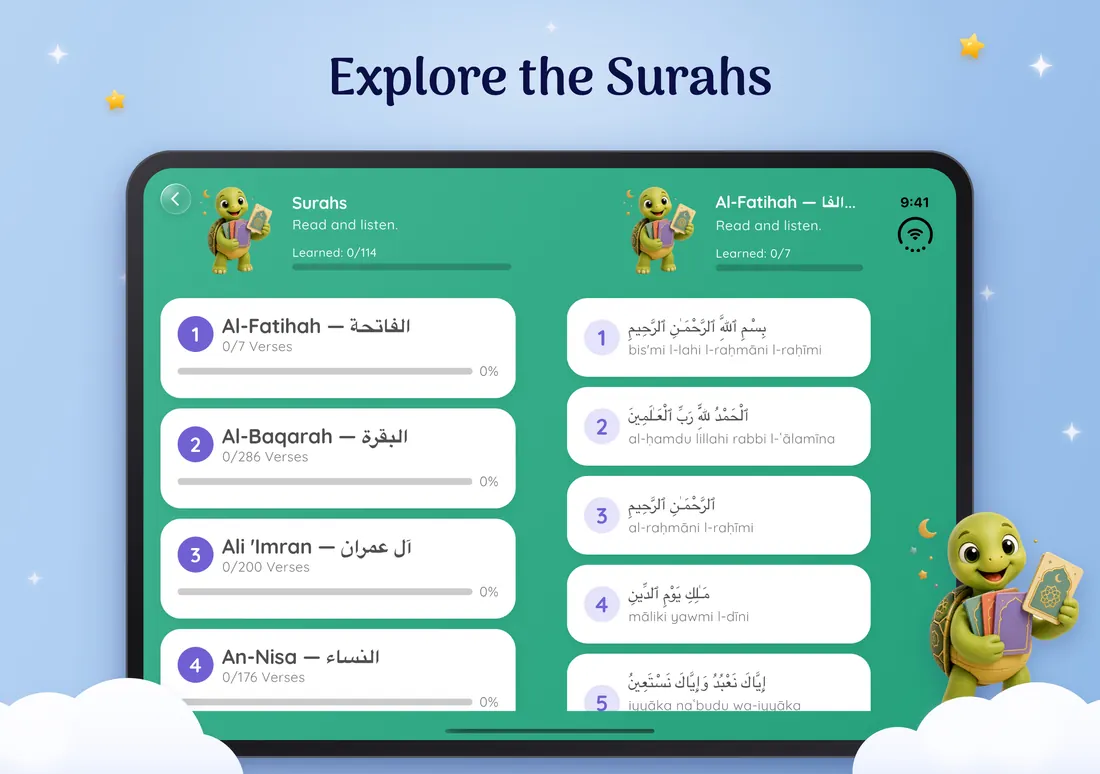
Learn Abasa word by word in the app
In Quran for Kids, every verse of Abasa is split into words your child can tap, hear and understand.
- Tap a word to hear it and see its meaning
- Play the whole verse once every word has been heard
- Learned words and verses stay marked
Begin your child's journey with the Quran today
Learn, play and grow with Quran for Kids.